
Why Evaluating CNC Machining Suppliers Matters
Choosing the wrong CNC machining supplier can create problems far beyond a single delayed order. Poor supplier selection often leads to quality issues, rework, missed delivery dates, unstable pricing, and long-term sourcing risk.
For engineers and procurement teams, CNC machining suppliers are not just vendors—they are an extension of the manufacturing process. Once a part is outsourced, much of the control shifts to the supplier’s equipment, people, and systems.
This is why supplier evaluation must go deeper than surface-level factors such as price or website appearance. A proper evaluation focuses on whether a supplier can consistently deliver parts that meet technical requirements, on time, and at predictable cost.
This guide explains how to evaluate a CNC machining supplier using practical, real-world criteria that experienced buyers rely on.
1. Assess CNC Machining Capability and Equipment
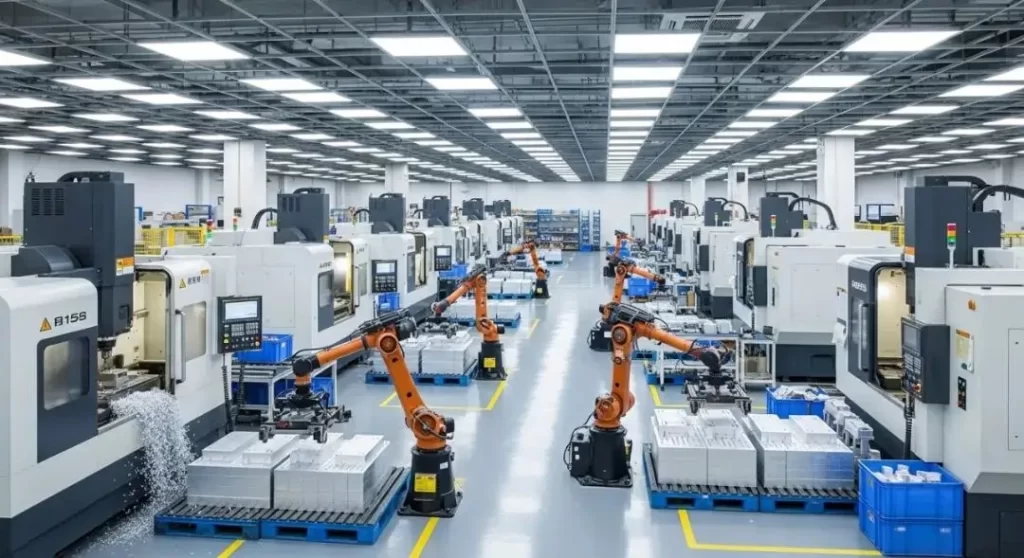
The first step in evaluating a CNC machining supplier is understanding what they can physically produce. Machine capability defines the boundaries of what is feasible, repeatable, and economical.
Key questions to ask include:
- What types of CNC machines do they operate?
- How many axes are available (3-axis, 4-axis, 5-axis)?
- What is the maximum part size and weight they can handle?
- What materials do they regularly machine?
A supplier with only basic 3-axis machines may still be a good choice for simple prismatic parts, but they may struggle with complex geometries that require multiple setups or tight positional tolerances.
Advanced equipment such as 4-axis or 5-axis machining centers, modern CNC lathes with live tooling, and automated probing systems often indicate higher process capability and efficiency. However, equipment alone is not enough—how it is used matters just as much.
Buyers should look for alignment between the supplier’s equipment and their actual part requirements, rather than assuming that “more advanced” always means “better.”
2. Evaluate Engineering and Manufacturing Expertise
CNC machining is not a push-button process. Skilled engineers and machinists are essential for translating drawings into stable manufacturing processes.
A strong supplier should be able to:
- Review drawings critically and identify potential issues
- Suggest design-for-manufacturability (DFM) improvements
- Explain machining strategies clearly
- Communicate tolerance and cost trade-offs
If a supplier simply accepts drawings without asking questions, this can be a warning sign. Experienced suppliers usually ask about tolerances, surface finish, functional intent, and inspection expectations because they are actively managing risk.
Engineering support is especially important for complex parts, tight tolerances, or new product development. Suppliers who engage early often help reduce cost and improve quality before production begins.
3. Review Quality Management and Inspection Capability
Quality control is one of the most critical factors when evaluating a CNC machining supplier. Without a robust quality system, even good machines and skilled operators cannot guarantee consistent results.
Buyers should evaluate:
- Whether the supplier has a formal quality management system
- Inspection equipment (calipers, micrometers, CMM, gauges)
- Calibration and measurement traceability
- Documentation practices and record keeping
Certifications such as ISO 9001 are useful indicators, but they should not be the sole deciding factor. More important is how inspection is actually performed on the shop floor.
A capable supplier can clearly explain:
- Which dimensions are inspected
- How often inspections are performed
- What happens when a nonconformance is found
This transparency builds confidence and reduces the risk of quality disputes later.
4. Analyze Quoting Accuracy and Transparency
A CNC machining quote is more than a price—it reflects the supplier’s understanding of the part and their approach to risk.
When evaluating a supplier, pay attention to:
- How quickly they respond to RFQs
- Whether they ask clarification questions
- How detailed the quotation is
- Whether assumptions are clearly stated
Accurate quotes usually include information about lead time, material, inspection scope, and any special requirements. Vague or overly simplified quotes may hide assumptions that cause problems later.
Large price differences between suppliers often result from different assumptions, not just cost efficiency. A good supplier helps buyers understand why a quote is structured the way it is.
Consistency between quoted prices and final invoices is also a strong indicator of supplier reliability.
5. Check Delivery Performance and Capacity Planning
On-time delivery is as important as part quality. A supplier that delivers late can disrupt production schedules and increase overall cost.
To evaluate delivery capability, buyers should consider:
- Typical lead times for similar parts
- Production capacity and machine utilization
- How rush orders or delays are handled
- Communication during production
Suppliers who routinely overpromise on lead time may create ongoing schedule problems. Reliable suppliers are usually conservative but consistent.
Understanding a supplier’s capacity planning approach helps buyers determine whether the supplier can scale with future demand.
6. Evaluate Communication and Responsiveness
Communication quality is often underestimated in supplier evaluation, yet it has a major impact on project success.
Good CNC machining suppliers:
- Respond promptly and clearly
- Explain technical issues in understandable terms
- Notify buyers early when problems arise
- Document decisions and changes
Poor communication can turn small issues into major delays. Suppliers who are transparent and proactive reduce stress and build long-term trust.
Responsiveness during the quotation stage often reflects how communication will be handled during production.
7. Understand Cost Structure and Risk Management
Evaluating a CNC machining supplier also means understanding how they manage cost and risk.
Experienced suppliers consider:
- Material sourcing risk
- Tool wear and setup complexity
- Scrap probability
- Inspection workload
Suppliers who understand their own cost drivers are better positioned to offer stable pricing over time. They are also more likely to suggest cost-saving changes that do not compromise quality.
Buyers should be cautious of suppliers who consistently underprice jobs, as this often leads to quality shortcuts or financial instability.
8. Review Experience With Similar Parts and Industries
Past experience is one of the strongest predictors of future performance.
When evaluating a supplier, consider:
- Experience with similar materials
- Experience with similar tolerances and geometries
- Familiarity with industry standards
A supplier experienced in aerospace or medical work may excel at tight tolerances and documentation, while a supplier focused on industrial components may offer better cost efficiency for standard parts.
The best supplier is often the one whose experience most closely matches your specific application.
9. Start With Trial Orders and Performance Tracking
No evaluation is complete without real-world performance data.
Many buyers start with:
- Prototype orders
- Low-volume trial production
- First article inspections
These trial orders provide valuable insight into:
- Actual quality versus promised quality
- Delivery reliability
- Communication effectiveness
Tracking supplier performance over time allows buyers to make data-driven sourcing decisions rather than relying on assumptions.
10. Consider Long-Term Partnership Potential
Finally, buyers should evaluate whether a CNC machining supplier is suitable for a long-term relationship.
Long-term partners tend to:
- Invest in understanding your products
- Optimize processes over time
- Offer more stable pricing
- Support design and volume changes
Transactional sourcing may work for one-off jobs, but strategic partnerships often deliver better total value.
Conclusion
Evaluating a CNC machining supplier requires a balanced view of technical capability, quality systems, communication, and risk management. Price alone is never a reliable indicator of supplier performance.
By assessing equipment, engineering expertise, inspection practices, quoting transparency, and long-term reliability, buyers can select suppliers who consistently deliver quality parts on time and at predictable cost.
In CNC machining, the right supplier is not just a cost source—it is a critical manufacturing partner.