
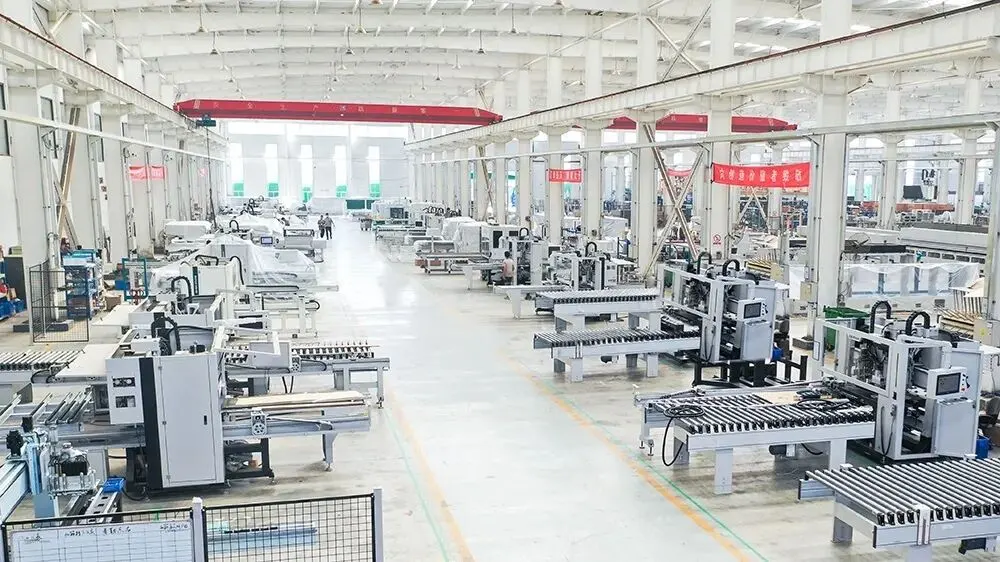
Why Buyers Source CNC Machining in China
China has become one of the world’s largest CNC machining hubs. From prototypes to medium- and high-volume production, buyers across industries increasingly turn to Chinese suppliers for machined parts.
This trend is driven by more than just low labor cost. Over the past two decades, China has built a dense manufacturing ecosystem that combines equipment availability, skilled labor, and supply-chain depth at a scale few regions can match.
However, CNC machining in China is not universally “good” or “bad.” It is a sourcing option with clear strengths and equally real risks. Buyers who understand both sides are far more likely to succeed.
The Main Advantages of CNC Machining in China
1. Cost Competitiveness
The most obvious advantage of CNC machining in China is cost. While labor costs have risen in recent years, overall manufacturing costs remain lower than in North America, Western Europe, or Japan.
Cost advantages come from:
- Lower labor and overhead costs
- High competition among suppliers
- Efficient material sourcing
- Flexible production scaling
For parts with moderate complexity and reasonable tolerances, Chinese CNC suppliers can often deliver competitive pricing without sacrificing basic functionality.
2. Broad CNC Machining Capability
China’s CNC machining capability has expanded dramatically. Many suppliers now operate:
- Modern 3-axis, 4-axis, and 5-axis machining centers
- Advanced CNC lathes with live tooling
- Automated probing and CAM systems
- In-house surface finishing and secondary processes
This allows buyers to source complex parts, multi-process components, and assemblies from a single region rather than coordinating multiple vendors.
3. Strong Supply Chain Integration
One of China’s biggest strengths is its manufacturing ecosystem. CNC machining suppliers are often located near material suppliers, heat treatment facilities, surface finishing providers, and logistics hubs.
This proximity reduces lead times and simplifies coordination for:
- Anodizing and plating
- Heat treatment
- Surface finishing
- Assembly and packaging
For buyers sourcing multi-step parts, this integration can be a significant advantage.
4. Scalability From Prototype to Production
Many Chinese CNC suppliers are comfortable handling both prototypes and scaled production. Buyers can often move from initial samples to larger orders without changing suppliers.
This scalability is particularly attractive for startups and product developers who expect volume growth but want to control early-stage costs.
The Disadvantages of CNC Machining in China
1. Communication and Interpretation Risks
One of the most common challenges buyers face is communication. Even when suppliers speak English, technical intent does not always translate perfectly.
Typical issues include:
- Misinterpretation of tolerances
- Assumptions about surface finish
- Unclear inspection scope
- Different standards expectations
These gaps often result in parts that technically meet drawings but fail functional or quality expectations.
2. Quality Consistency Variability
China’s CNC machining market is extremely broad. Supplier capability ranges from world-class manufacturers to small workshops with limited process control.
Quality inconsistency often arises from:
- Weak quality management systems
- Limited inspection capability
- High operator dependency
- Inconsistent subcontracted processes
Without proper vetting and controls, buyers may receive acceptable samples followed by inconsistent production batches.
3. Tolerance and Standard Misalignment
Different regions follow different default standards. When drawings lack explicit references, suppliers may apply local norms that differ from buyer expectations.
Common misalignments include:
- General tolerance assumptions
- Surface roughness interpretation
- Metric vs imperial conversion issues
- GD&T interpretation differences
These issues rarely come from bad intent—they come from missing clarity.
4. Lead Time and Logistics Risk
International logistics introduce unavoidable uncertainty. Even when production is on schedule, shipping delays, customs inspections, or documentation errors can affect delivery.
Buyers must account for:
- Transit time variability
- Customs clearance delays
- Shipping cost fluctuations
For time-critical projects, these factors can outweigh cost savings.
Key Buyer Risks When Sourcing CNC Machining in China
Risk 1: Choosing Based on Price Alone
The lowest quote often carries the highest risk. Extremely low pricing may indicate:
- Loose tolerance assumptions
- Minimal inspection
- Unstable processes
- Hidden subcontracting
Price-focused sourcing frequently leads to rework, delays, or total project failure.
Risk 2: Incomplete or Vague RFQs
Chinese suppliers tend to quote strictly based on what is written. Missing details force suppliers to make assumptions.
Incomplete RFQs increase the risk of:
- Quote mismatch
- Unexpected cost increases
- Quality disputes
Risk 3: Over-Reliance on Certifications
Certifications such as ISO 9001 are useful indicators, but they do not guarantee consistent execution.
Buyers should evaluate actual inspection practices, not just certificates.
Risk 4: Lack of Onboarding and Trial Orders
Skipping prototypes or trial runs is risky when sourcing internationally.
Small trial orders help validate:
- Quality consistency
- Communication effectiveness
- Delivery reliability
How Buyers Can Reduce Risk When Sourcing CNC Machining in China
1. Provide Extremely Clear Technical Documentation
Clear drawings, defined tolerances, surface finish specifications, and inspection requirements reduce ambiguity.
Assume nothing is “standard” unless explicitly stated.
2. Align Expectations Early
Confirm assumptions on:
- General tolerances
- Inspection scope
- Surface finish interpretation
- Packaging and logistics
Written confirmation is essential.
3. Start With Small, Controlled Orders
Use prototypes or pilot batches to validate capability before committing to larger volumes.
4. Build Long-Term Supplier Relationships
Suppliers who understand your products and expectations perform better over time. Long-term partnerships often result in:
- Improved quality consistency
- Better cost optimization
- More transparent communication
When CNC Machining in China Makes Sense
CNC machining in China is well-suited for:
- Cost-sensitive projects with reasonable tolerances
- Medium-volume production
- Products with stable designs
- Buyers willing to manage sourcing actively
It may be less suitable for ultra-tight tolerances, extremely time-sensitive orders, or buyers unwilling to invest in supplier management.
Conclusion
CNC machining in China offers significant advantages in cost, capability, and scalability—but it is not risk-free.
Buyers who succeed do not rely on price alone. They invest in clear documentation, careful supplier evaluation, trial orders, and ongoing communication.
When approached strategically, CNC machining in China can be a powerful manufacturing solution. When approached casually, it can quickly become a source of delays, disputes, and hidden costs.